


Thangka Painting
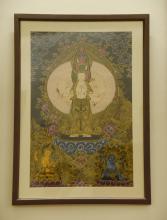
Artwork – Thangka Painting
Region – Sikkim, Himachal Pradesh, Ladakh, Arunachal Pradesh
This intricate artwork is a traditional Thangka painting from the Himalayan regions of India—particularly Sikkim, Himachal Pradesh, Ladakh, and Arunachal Pradesh. Thangka paintings are devotional Buddhist scrolls, used for meditation and teaching, dating back to the 7th century when Indian Buddhist art spread to Tibet.
This piece portrays Avalokiteshvara (Chenrezig) in his Thousand-Armed form, symbolizing boundless compassion. With eleven serene heads and a thousand arms, each with an eye, he embodies the Bodhisattva’s vow to see and relieve the suffering of all sentient beings. Thangkas are painted on cotton or silk using natural pigments and often framed in brocade. Rich in iconography and symbolism, they depict deities, mandalas, and sacred narratives. These sacred artworks are not just visual masterpieces but also spiritual tools, meticulously crafted by trained monks and artists to preserve and transmit Buddhist teachings and Himalayan cultural heritage across generations.

